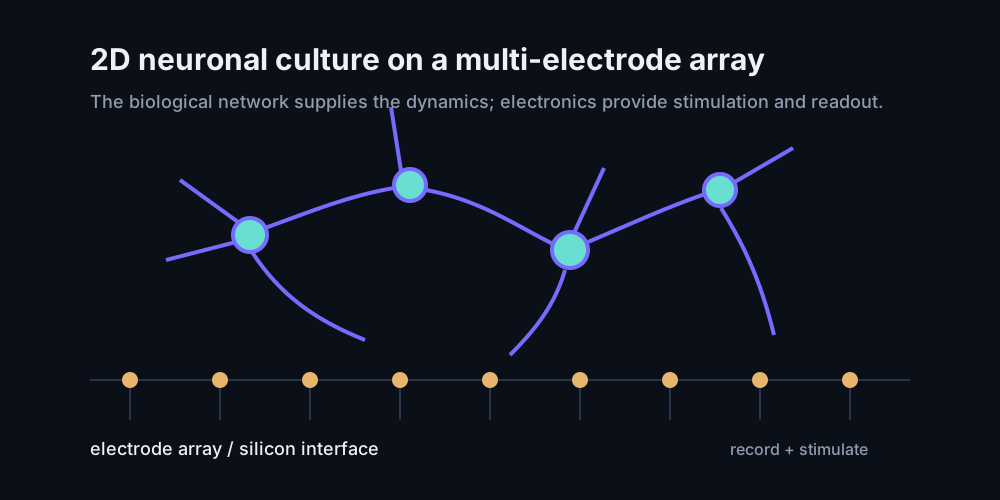
A neural biocomputer chip couples living neurons directly to a microelectrode or silicon interface. The chip provides bidirectional electrical access: stimulation carries encoded information into the culture and recorded spikes carry activity back into software.
What sits on the chip
The biological layer may contain cultured human or animal neurons. Below it sits an array of electrodes and the circuitry required to stimulate and record the network. A complete system also needs life support, environmental control and software.
CL1 and DishBrain
DishBrain was a research system that coupled cortical cultures to a high-density electrode array. CL1 packages neuron-on-silicon computing with recording, stimulation, life support and a developer-facing platform.
What limits the chip model
A planar chip gives strong electrical access to cells close to the surface. Three-dimensional tissue motivates different interface geometries, including conformal shells, stacked meshes and embedded flexible electronics.