A biocomputer is a computing system in which biological material performs a meaningful part of the information processing. The wider field of biocomputing also includes DNA computing and engineered cellular logic; this site concentrates on the fast-moving neural branch: living neurons and brain organoids connected directly to electronics.
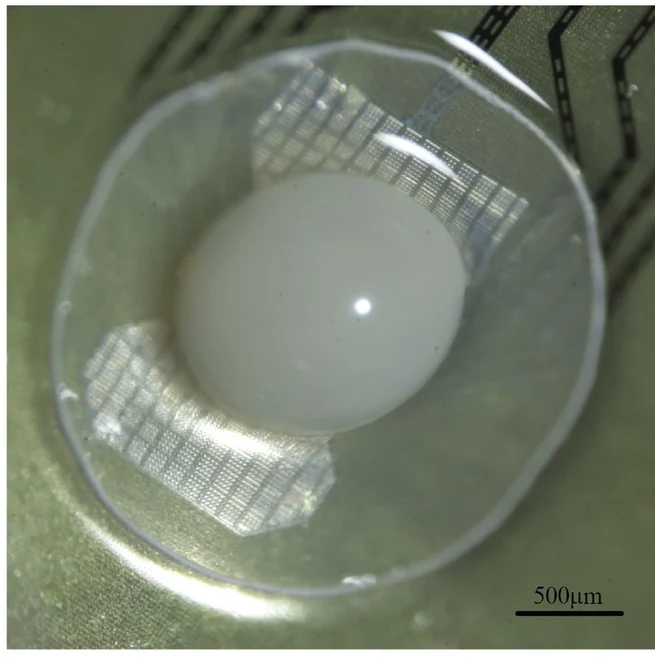
In these systems, software encodes information into electrical or chemical stimulation. Living networks respond through their existing dynamics and plasticity. Electrodes record the response, and software may use it as an output or feed it back into the next step of the task.
A biological sample becomes part of a biocomputer when its physical state contributes directly to storing, transforming or processing information inside a defined computational system.
Why neurons?
Neural tissue combines computation, memory and adaptation in the same physical network. Synaptic strengths and network dynamics change with activity, making biological neural networks interesting for continual learning, reservoir computing and closed-loop control.
Neurons plainly process information. The engineering test is whether neural substrates can become reliable, accessible and useful enough to outperform simpler electronic approaches on specific tasks.
Organoids and neuronal cultures
Two-dimensional neuronal cultures are comparatively easy to interface with electrode arrays. Brain organoids offer three-dimensional organisation but are harder to stimulate, record, feed and standardise.
Terms you will encounter
Synthetic biological intelligence describes engineered biological neural networks coupled to hardware and software. Organoid intelligence focuses specifically on three-dimensional brain organoids. Wetware computing is an informal umbrella term for computation involving living biological material.
For a concrete signal path, see how biocomputers work. Current examples are indexed in the evidence database. The living computer, biocomputer chip and brain organoid computer pages separate three common uses of the terminology.