A living computer uses living biological material as part of the information-processing machinery. In current neural systems that material is usually a two-dimensional neuronal culture or a three-dimensional neural organoid coupled to electrodes.
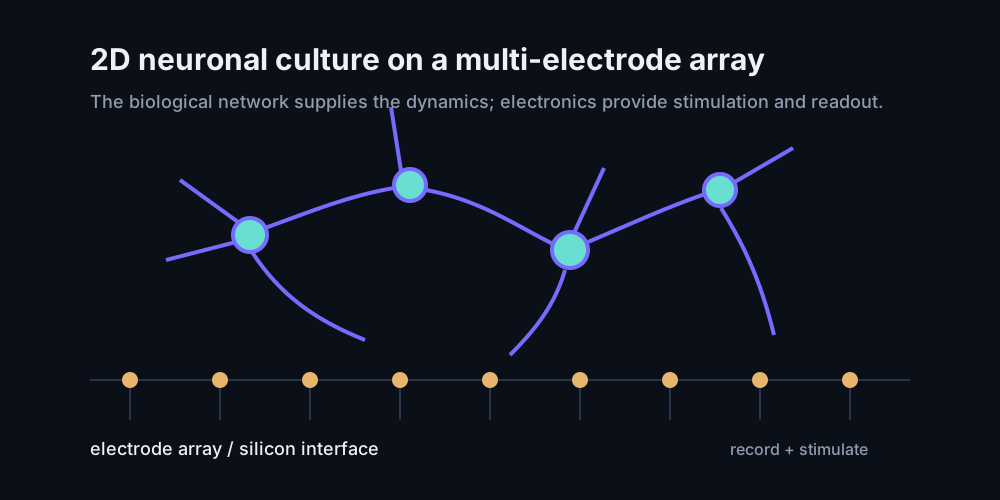
Current systems are hybrid
Current systems depend on conventional electronics, fluidics, temperature control, media, stimulation and software. The living substrate performs a defined part of a hybrid computation.
Two main neural forms
Planar neuronal cultures grow across electrode arrays and are comparatively accessible electrically. Brain organoids provide a three-dimensional neural structure with a more difficult interface problem.
What exists now
Peer-reviewed systems include DishBrain, Brainoware and newer closed-loop learning experiments. Commercial access now includes CL1 and the remotely accessible FinalSpark Neuroplatform.
What the field still needs
Useful general-purpose wetware hardware requires better reproducibility, stable I/O, long culture lifetime, repeatable learning and matched benchmarks against electronic alternatives. The current systems are research platforms and early specialist devices.