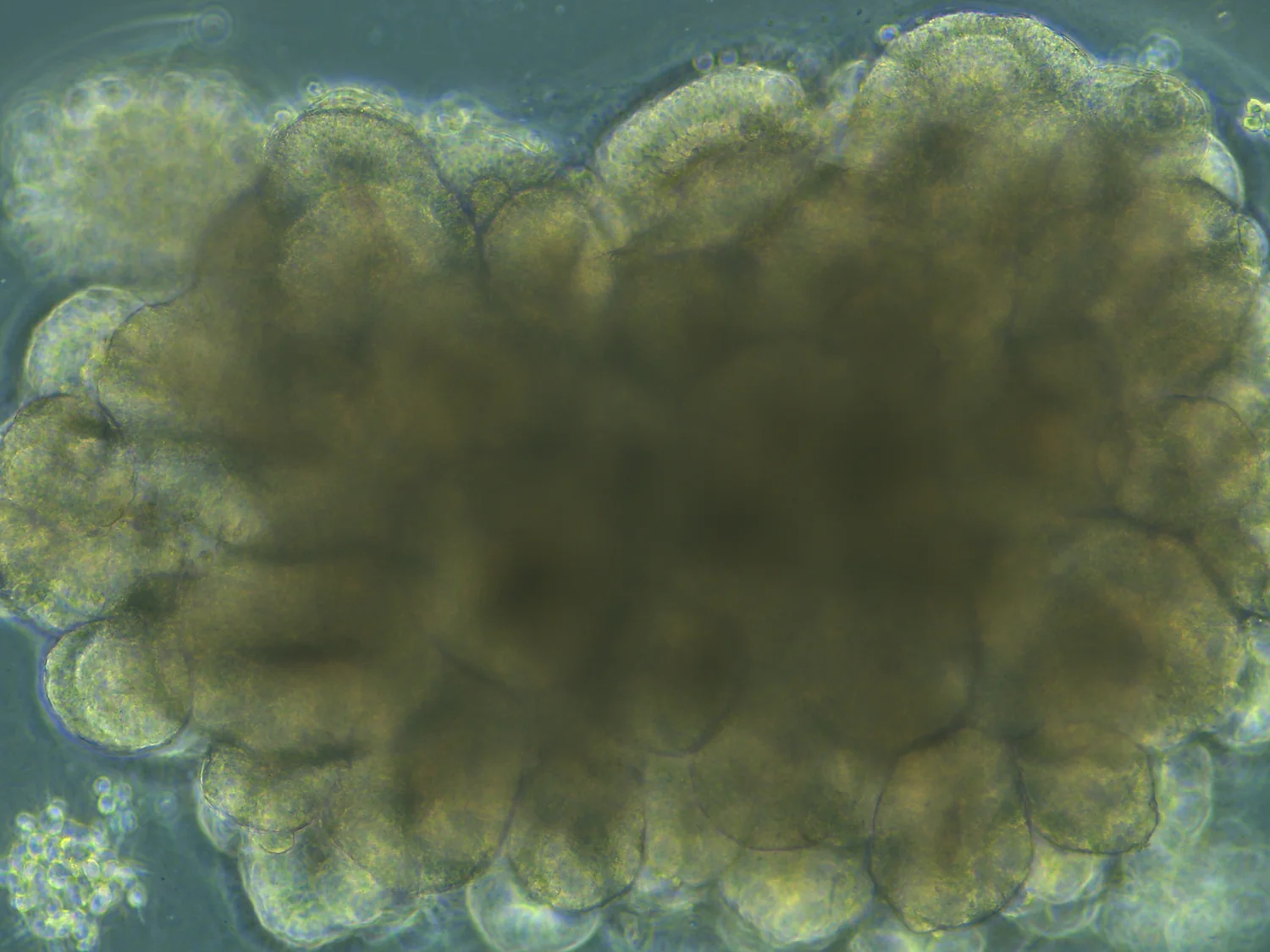
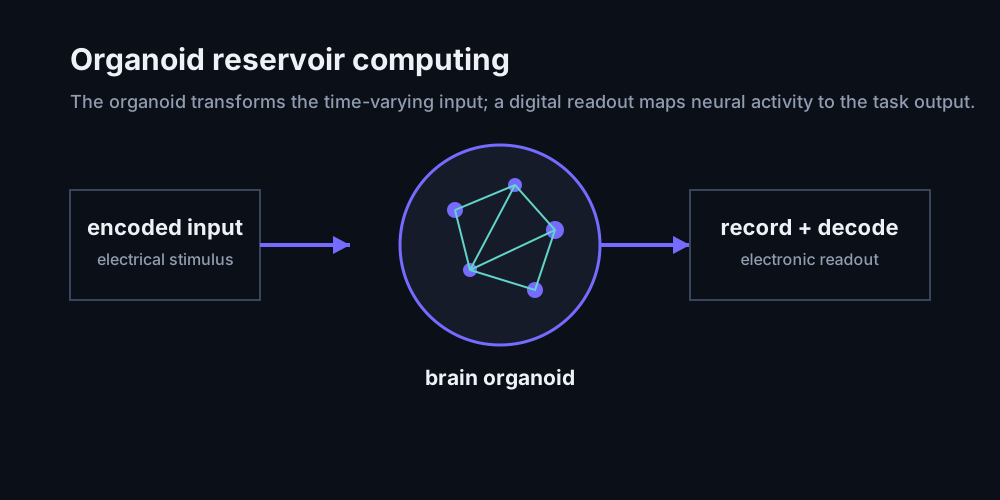
A brain organoid computer uses three-dimensional neural tissue grown from stem-cell-derived neural cells as part of a computational system. The organoid is stimulated, its electrical activity is recorded and software maps those responses onto a task.
How organoid computers differ from 2D neuron cultures
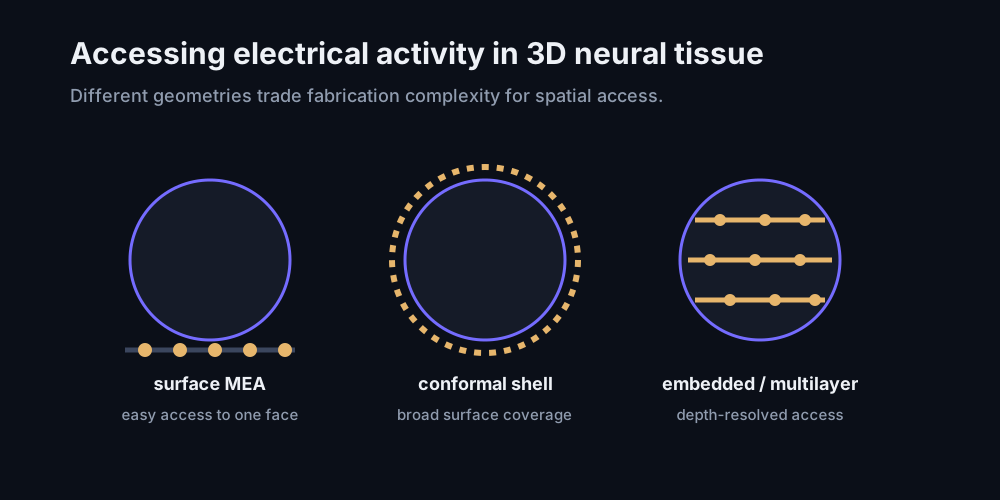
Three-dimensional tissue offers richer spatial organisation and connectivity. It also creates harder engineering problems: oxygen and nutrient delivery, batch variability and access to activity deep inside the tissue.
Current examples
Brainoware used a human brain organoid as a reservoir for speech recognition and nonlinear prediction. Goal-directed cart-pole organoids tested feedback-driven adaptation. FinalSpark provides remote access to human neural organoids for experiments.
Organoid intelligence
Organoid intelligence is the research programme concerned with developing and studying computational capabilities in brain organoids. The term covers biology, interfaces, learning protocols, computational methods and ethics.